What Is an EEG?
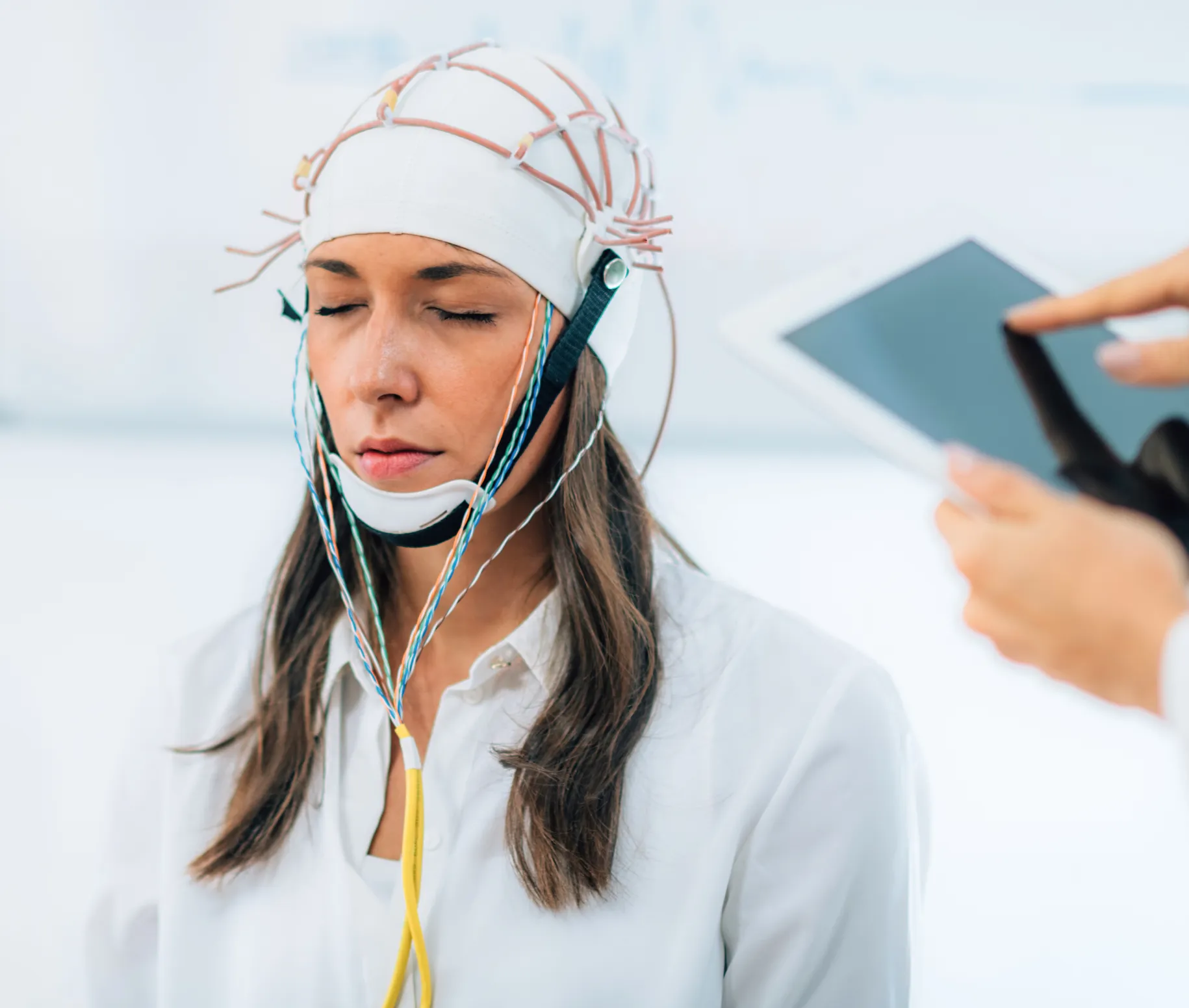
An EEG (electroencephalogram) is a non-invasive test that measures the electrical signals (brain waves) in your brain. These recordings help your doctor understand how your brain is functioning over time, whether during a short period in the office or over several days as you go about your daily routine.
EEG testing may be recommended to help evaluate:
- Seizures or epilepsy
- Fainting spells or blackouts
- Confusion or memory loss
- Sleep disturbances
- Head injuries
- Changes in behavior or awareness
What to Expect During Your EEG
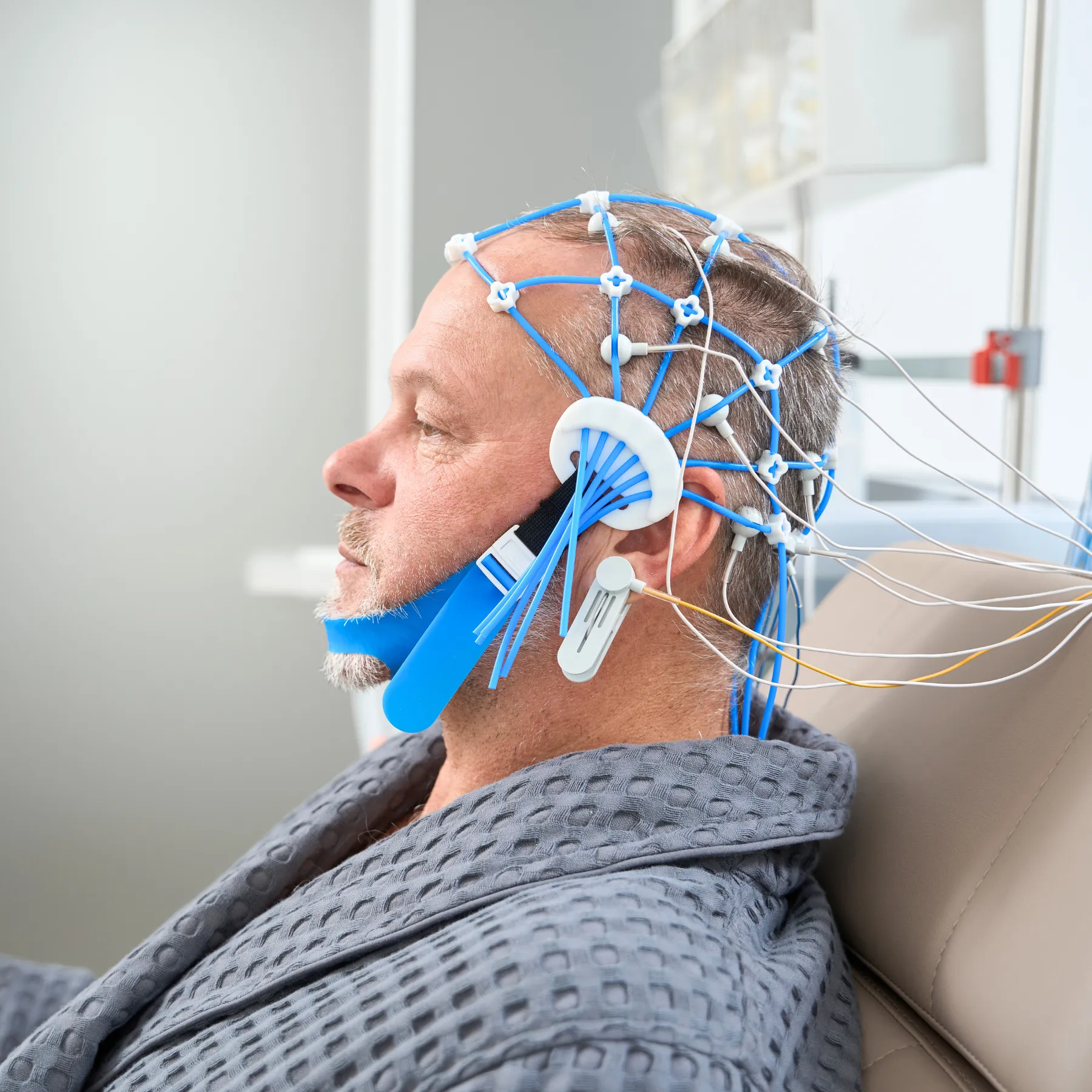
- You’ll be seated comfortably in a reclining chair. If possible, you may be encouraged to rest or nap during the test.
- A trained EEG technologist will gently apply small electrodes to your scalp using a safe, glue-like adhesive.
- To improve contact, the technologist may lightly scratch the surface of your scalp – this may feel slightly unusual but should not be painful.
- You may be asked to breathe deeply, close your eyes, or look at a flashing light, depending on the purpose of the test.
If you are undergoing a sleep-deprived EEG, you may feel tired afterward. We ask that you rest in our lobby until you’re fully alert and ready to resume your usual routine.

How to Prepare for Your EEG
Taking a few simple steps before your test can help ensure accurate results and a smooth experience:
- Wash your hair the night before or morning of the test. Please avoid using conditioner, oils, or styling products.
- Remove any hair extensions or braids.
- Wigs and hairpieces must be removed during the test.
- Wear a button-down or loose-fitting shirt to make it easier to apply the electrodes.
- Take all regular medications as prescribed, unless your physician has told you otherwise.
- Limit caffeine on the day of the test, as it can interfere with brain activity.
If additional instructions are needed, our office staff or EEG technician will review them with you ahead of time or when you arrive for your appointment.
After Your EEG
Most patients can return to their normal activities immediately after a routine EEG. If you’ve had a sleep-deprived EEG and feel drowsy, we’ll provide a quiet space for you to rest until you feel alert and ready to leave.