What Is Muscle and Nerve Testing?
Muscle and nerve testing helps evaluate how your nerves and muscles are working, especially if you’re having symptoms like:
- Tingling or numbness
- Muscle cramps or weakness
- Burning pain or shooting sensations
- Difficulty walking or holding objects
Your neurologist may recommend this testing to help diagnose or monitor conditions like:
- Peripheral neuropathy
- Carpal tunnel syndrome
- Sciatica or pinched nerves
- Radiculopathy
- Myopathy or neuromuscular junction disorders
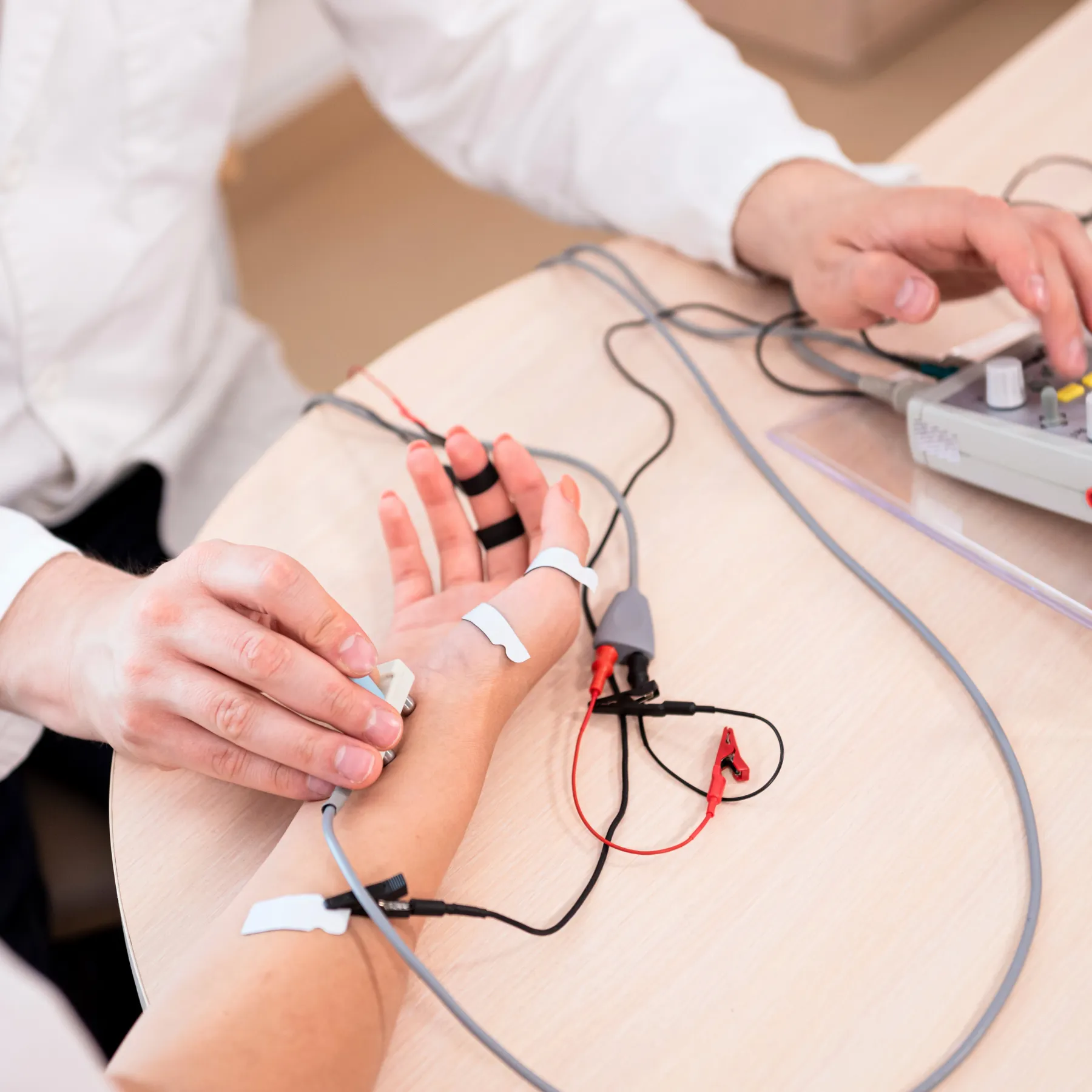
What to Expect During Your Test
Depending on your symptoms, you may receive one or both of the following tests:
Nerve Conduction Study (NCS):
Small, brief electrical pulses are applied to your skin to test how well your nerves send signals. You may feel a quick, mild tingling sensation, but the test is not painful.
Electromyography (EMG):
A very fine, sterile needle is placed into specific muscles to record electrical activity. Some people feel mild discomfort, but we make every effort to keep you comfortable throughout.
You may also be scheduled for Evoked Potentials testing or other specialized studies if your doctor feels it’s appropriate.

How to Prepare for Your Test
Please shower before your appointment, and don’t use lotions or oils on your skin that day.
- Tell us if you’re taking any blood thinners (like Coumadin®), have a pacemaker, or have conditions like hemophilia or myasthenia gravis.
- You can eat, drive, and return to normal activities afterward.
Most tests take 20 to 90 minutes, and we’ll explain each step to help you feel as relaxed as possible.